
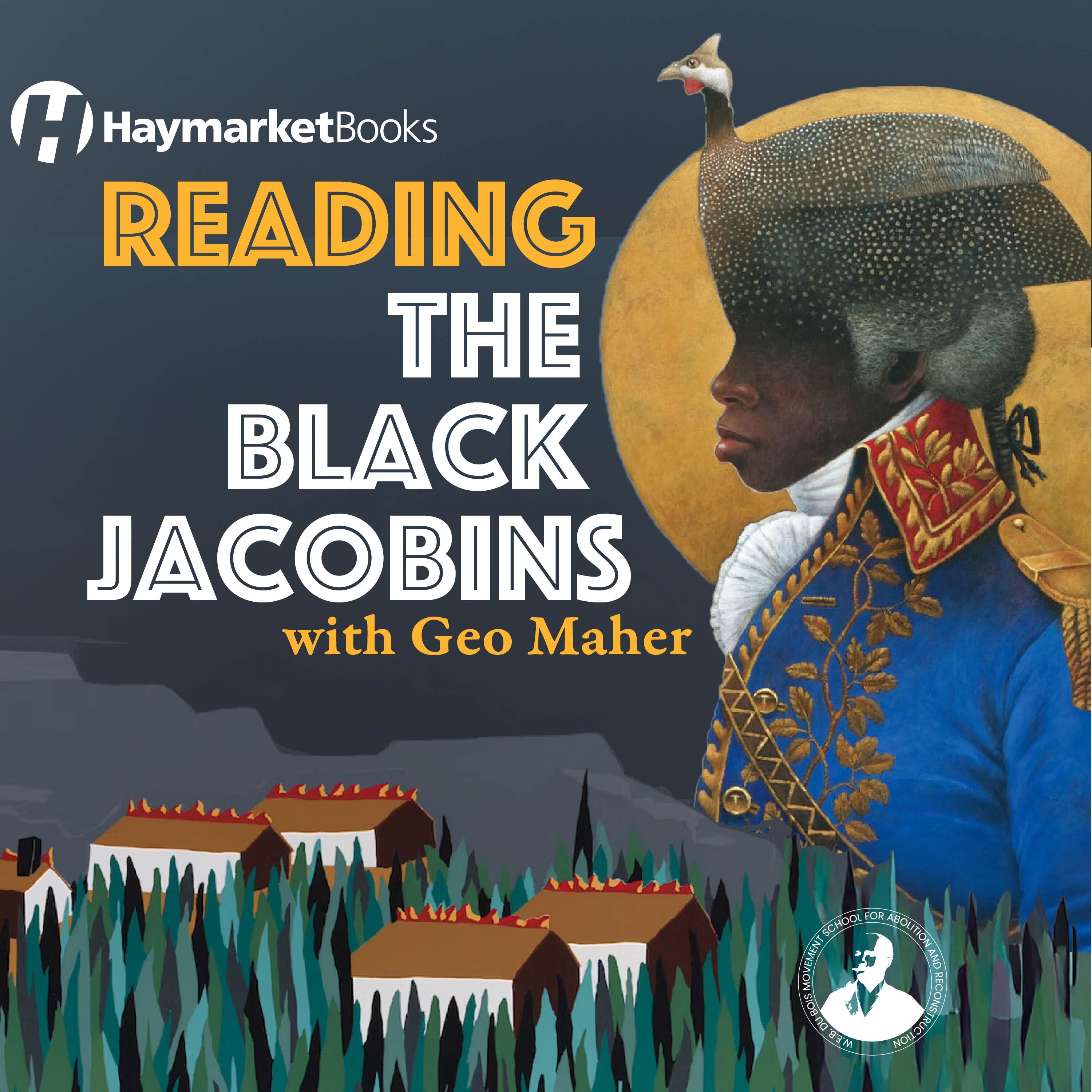
This is the fifth episode of our 12-part series Reading the Black Jacobins with Geo Maher.
Readings for Episode 5 are:
Study Questions for Episode 5 are:
As always, we’ll be using the post-1963 edition of The Black Jacobins, which is identifiable by the Appendix.
The Abolition School Radio podcast is a collaboration between Haymarket Books and the W.E.B. Du Bois Movement School for Abolition and Reconstruction.
This is the seventh episode of our 12-part series Reading Frantz Fanon with Geo Maher.
Readings for Episode 7 are:
Study Questions for Episode 7 are:
The Abolition School Radio podcast is a collaboration between Haymarket Books and the W.E.B. Du Bois Movement School for Abolition and Reconstruction.
This is the eighth episode of our 12-part series Reading Frantz Fanon with Geo Maher.
Readings for Episode 8 are:
Study Questions for Episode 8 are:
The Abolition School Radio podcast is a collaboration between Haymarket Books and the W.E.B. Du Bois Movement School for Abolition and Reconstruction.
This is the ninth episode of our 12-part series Reading Frantz Fanon with Geo Maher.
Readings for Episode 9 are:
Study Questions for Episode 9 are:
The Abolition School Radio podcast is a collaboration between Haymarket Books and the W.E.B. Du Bois Movement School for Abolition and Reconstruction.
This is the tenth episode of our 12-part series Reading Frantz Fanon with Geo Maher.
Readings for Episode 10 are:
Study Questions for Episode 10 are:
The Abolition School Radio podcast is a collaboration between Haymarket Books and the W.E.B. Du Bois Movement School for Abolition and Reconstruction.
This is the eleventh episode of our 12-part series Reading Frantz Fanon with Geo Maher.
Readings for Episode 11 are:
Study Questions for Episode 11 are:
The Abolition School Radio podcast is a collaboration between Haymarket Books and the W.E.B. Du Bois Movement School for Abolition and Reconstruction.
This is the final episode of our 12-part series Reading Frantz Fanon with Geo Maher. If you liked this season of Abolition School Radio, tune in to our other seasons on W.E.B. Du Bois’ Black Reconstruction, CLR James’ Black Jacobins, a course on the Mexican Revolution, and more at haymarketbooks.org.
Readings for Episode 12 are:
Study Questions for Episode 11 are:
The Abolition School Radio podcast is a collaboration between Haymarket Books and the W.E.B. Du Bois Movement School for Abolition and Reconstruction.
In 2026, we’re celebrating 25 years of publishing “Books for Changing the World.” In those 25 years, we’ve helped build critical space and infrastructure for radical ideas and movements on the left to grow. That work of institution-building and popular political education has never been more necessary or more urgent. We need your help to continue to do this work.