NEW YORK TIMES BESTSELLER
LOS ANGELES TIMES BESTSELLER
INDEPENDENT PRESS TOP 40 BESTSELLER
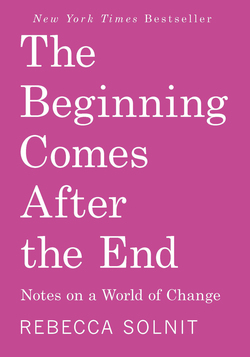
Rebecca Solnit offers a thrilling account of the sheer breadth and scale of social, political, scientific, and cultural change over the past three quarters of a century.
In this sequel to her enduring bestseller Hope in the Dark, Solnit surveys a world that has changed dramatically since the year 1960. Despite the forces seeking to turn back the clock on history, change is not a possibility; it is an inevitability.
The changes amount to nothing less than dismantling an old civilization and building a new one, whose newness is often the return of the old ways and wisdoms. In this rising worldview, interconnection is a core idea and value. But because the transformation is obscured within a longer arc of history, its scale is seldom recognized.
While the white nationalist and authoritarian backlash drives individualism and isolation, this new world embraces antiracism, feminism, a more expansive understanding of gender, environmental thinking, scientific breakthroughs, and Indigenous and non-Western ideas, pointing toward a more interconnected, relational world.
Rebecca Solnit is the author of more than 25 books, including Orwell’s Roses, Hope in the Dark, Men Explain Things to Me, A Paradise Built in Hell: The Extraordinary Communities that Arise in Disaster, and A Field Guide to Getting Lost. A longtime climate and human rights activist, she serves on the boards of Oil Change International and Third Act. Her newsletter of essays and analyses can be found at meditationsinanemergency.com.
ISBN: 9798888904923
Publication date: April 21, 2026
“An urgent manifesto for our tumultuous time.”
—Sophia Kercher, Los Angeles Times
“The Beginning Comes After The End is a brilliant short history of our immediate past, showing how everything — from the environment to the cells in our body — is connected. As she describes it, our world is a network of interrelated systems, the isolated individual is a fiction, and the natural and social spheres exist more through collaboration and co-operation than competition. Solnit weaves a remarkable tapestry, connecting apparently disparate thinkers, activists and ideas.“
—Jerry Brotton, Financial Times
“In this remarkably lucid and fluent chronicle of social change over the last six decades or so, the course of her lifetime, she traces profound shifts in perceptions and convictions regarding race, gender, equality, and the environment. Confirming that we’re in the midst of a massive backlash as the right attempts to undo everything from the promise of renewable energy to efforts at achieving diversity, equity, and inclusion, Solnit argues that this reaction is due to already profound and ultimately unstoppable societal transformations. Solnit’s holistic anatomy of the dynamics of change is precise, compelling, and deeply clarifying.”
—Donna Seaman, ALA Booklist Starred Review
“A convincing vision of a brighter future. A climate and human rights activist, Solnit examines the insidious consequences of the ideology of isolation, to which she attributes current virulent efforts at suppression, fear of diversity, and denigration of ideas considered “woke.” Instead, she offers persuasive evidence of the acknowledgment of the connection of humans to wilderness, nature, and one another: local groups cleaning up salmon streams and watching the fish return; an energy revolution focused on renewables; the impact of anti-racist, feminist, immigrant, disability-rights, and queer-rights movements; the emergence of environmental awareness in creating laws and systems to protect the natural world; the shift to decolonization globally.”
—Kirkus Starred Review
“Rebecca Solnit’s clearsighted, inspiring essay collection celebrates the achievements of the progressive movement and poses a hopeful vision of the future.”
—Foreword Reviews
“Solnit takes the long view on the past 65 years of social progress. In her telling, the current rise of authoritarianism is the dying gasp of an old world order, and we are on the precipice of living in a multicultural and interconnected world.”
—The New York Times
“Explaining that change is “invisible” over longer stretches of time, once the “baseline” has been forgotten, the author recaps the significant social advancements of the past several decades, including civil rights, feminism, LGBTQ+ equality, and the environmental movement.”
—Publishers Weekly
One of the best ways you can support Haymarket is by becoming a member of our subscription program. Receive up to 40 books per year and help ensure the future of radical publishing.
Join today and start your subscription with one or more of these new books!